Buy numenprocess.eu ?
We are moving the project
numenprocess.eu .
Are you interested in purchasing the domain
numenprocess.eu ?
domain@kv-gmbh.de · 0541-91531010
Buy numenprocess.eu ?
What are the differences between Sanger DNA sequencing and NGS sequencing using a sequencer?
Sanger DNA sequencing is a traditional method that involves sequencing one DNA fragment at a time using chain-terminating dideoxynucleotides. It is a slower and more labor-intensive process compared to NGS sequencing. NGS sequencing, on the other hand, uses massively parallel sequencing technology to simultaneously sequence millions of DNA fragments. This allows for high-throughput sequencing and the generation of large amounts of data in a shorter amount of time. Additionally, NGS sequencing can provide more comprehensive and detailed information about the entire genome, making it more suitable for large-scale genomic studies. **
Why are modern DNA sequencing methods faster?
Modern DNA sequencing methods are faster due to advancements in technology and automation. High-throughput sequencing machines can process multiple samples simultaneously, increasing the speed of data generation. Additionally, improvements in chemistry and bioinformatics have streamlined the sequencing process, reducing the time and resources required for analysis. These advancements have made it possible to sequence large genomes in a fraction of the time it would have taken with older methods, revolutionizing the field of genomics. **
Similar search terms for Sequencing
Top-Angebote
Products related to Sequencing:
-
Learning Resources Numberblocks Sequencing Puzzle for Ages 3+ - Numberblocks 1-20 Double Sided Puzzle SetHelps children master number sequencing with friendly Numberblocks from One to Twenty. Includes 10 pieces with double-sided puzzles, color-coded pieces, and a number line for ordering and comparing numbers. Suitable for ages 3 and up.9,66 £*Shipping: 3,95 £Secure redirect to the provider
-
Wrendale Designs 'Awakening' Hedgehog ScarfThe Wrendale Designs Hedgehog Everyday Scarf Awakening will add a touch of colour to your outfit and features lovely hedgehog illustrations. Made from 100% recycled polyester, the scarf is lightweight and comes complete with a beautifully coloured gift bag.19,80 £*Shipping: 3,50 £Secure redirect to the provider
-
Uplifted Finds Professional LED Pet Nail Clippers With Bloodline Illumination Professional LED Pet Nail Clippers With Bloodline Illumination"Take the guesswork and anxiety out of grooming with these highprecision LED Pet Nail Clippers. Designed specifically to enhance safety, the integrated ultrabright LED light illuminates your pets nails, clearly revealing the ""quick"" (the sensitive..."55,97 $*Shipping: 0,00 $Secure redirect to the provider


-
What is the DNA sequencing for guanine?
The DNA sequencing for guanine is represented by the letter "G". Guanine is one of the four nucleobases found in DNA, along with adenine, cytosine, and thymine. It pairs with cytosine through three hydrogen bonds in the DNA double helix structure. The specific sequence of guanine, along with the other nucleobases, forms the genetic code that determines the characteristics and functions of an organism. **
-
What is the difference between sequencing and transposition?
Sequencing is the process of determining the precise order of nucleotides in a DNA or RNA molecule. It involves identifying the sequence of bases (A, T, C, G) in a specific region of genetic material. Transposition, on the other hand, is a genetic process where a segment of DNA moves from one location in the genome to another. This can result in genetic mutations or changes in the expression of certain genes. In summary, sequencing involves determining the order of nucleotides, while transposition involves the movement of genetic material within the genome. **
-
What is the difference between these two sequencing methods?
The difference between Sanger sequencing and next-generation sequencing (NGS) lies in their technology and throughput. Sanger sequencing, also known as first-generation sequencing, is a traditional method that uses chain-terminating dideoxynucleotides to sequence DNA. It is a slower and more labor-intensive process, typically used for sequencing shorter DNA fragments. On the other hand, NGS is a high-throughput method that sequences millions of DNA fragments in parallel, allowing for faster and more cost-effective sequencing of entire genomes or targeted regions. NGS also provides greater depth of coverage and can detect rare genetic variants more effectively than Sanger sequencing. **
-
What does DNA sequencing have to do with evidence for evolution? Thank you in advance for your answers.
DNA sequencing is crucial in providing evidence for evolution because it allows scientists to compare the genetic makeup of different species. By analyzing the similarities and differences in DNA sequences, researchers can trace the evolutionary relationships between organisms and determine their common ancestry. This information helps to build a comprehensive understanding of how species have evolved over time and provides strong evidence for the theory of evolution. Additionally, DNA sequencing has also revealed genetic mutations and variations that have occurred over generations, further supporting the concept of natural selection and adaptation as driving forces of evolution. **


Is DNA sequencing and DNA sequence analysis the same thing?
No, DNA sequencing and DNA sequence analysis are not the same thing. DNA sequencing is the process of determining the precise order of nucleotides within a DNA molecule, while DNA sequence analysis involves interpreting and analyzing the data obtained from DNA sequencing to identify genes, mutations, or other genetic information. In other words, DNA sequencing is the method used to generate the DNA sequence data, while DNA sequence analysis is the process of interpreting and making sense of that data. **
What is the difference between DNA hybridization and DNA sequencing?
DNA hybridization is a technique used to determine the similarity between two DNA sequences by allowing them to bind together based on complementary base pairing. This method provides information on the degree of similarity between the sequences. On the other hand, DNA sequencing is a technique used to determine the exact order of nucleotides in a DNA molecule. This method provides the precise sequence of the DNA, allowing for detailed analysis of genetic information. **
Top-Angebote
Products related to Sequencing:
-
Rinnai MECS Electronic Sequencing System (Master + 1 Slave)Electronic Sequencing manifold for use with the Internal Rinnai Gas Water Heaters. The electronic control system can link each heater, turning each one on as required. The system automatically evens out the work load between units to minimise wear and tear.60,90 £*Shipping: 5,00 £Secure redirect to the provider
-
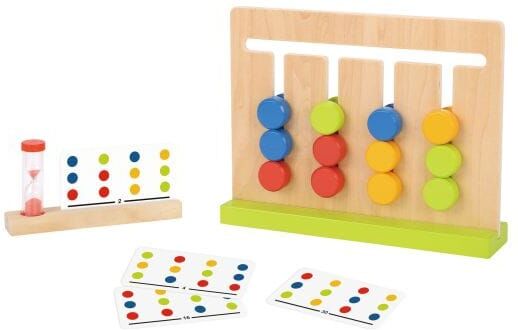
Tooky Toys Wooden Logic Game - Children's Sequencing and Spatial Reasoning Puzzle for Ages 6+Solid wood logic game for children ages 6 and older. Develops sequencing, spatial reasoning, and sustained attention. No screens required. Smooth edges and compact design for easy transport and storage.8,13 £*Shipping: 3,95 £Secure redirect to the provider
-
Learning Resources Numberblocks Sequencing Puzzle for Ages 3+ - Numberblocks 1-20 Double Sided Puzzle SetHelps children master number sequencing with friendly Numberblocks from One to Twenty. Includes 10 pieces with double-sided puzzles, color-coded pieces, and a number line for ordering and comparing numbers. Suitable for ages 3 and up.9,66 £*Shipping: 3,95 £Secure redirect to the provider
-
What are the differences between Sanger DNA sequencing and NGS sequencing using a sequencer?
Sanger DNA sequencing is a traditional method that involves sequencing one DNA fragment at a time using chain-terminating dideoxynucleotides. It is a slower and more labor-intensive process compared to NGS sequencing. NGS sequencing, on the other hand, uses massively parallel sequencing technology to simultaneously sequence millions of DNA fragments. This allows for high-throughput sequencing and the generation of large amounts of data in a shorter amount of time. Additionally, NGS sequencing can provide more comprehensive and detailed information about the entire genome, making it more suitable for large-scale genomic studies. **
-
Why are modern DNA sequencing methods faster?
Modern DNA sequencing methods are faster due to advancements in technology and automation. High-throughput sequencing machines can process multiple samples simultaneously, increasing the speed of data generation. Additionally, improvements in chemistry and bioinformatics have streamlined the sequencing process, reducing the time and resources required for analysis. These advancements have made it possible to sequence large genomes in a fraction of the time it would have taken with older methods, revolutionizing the field of genomics. **
-
What is the DNA sequencing for guanine?
The DNA sequencing for guanine is represented by the letter "G". Guanine is one of the four nucleobases found in DNA, along with adenine, cytosine, and thymine. It pairs with cytosine through three hydrogen bonds in the DNA double helix structure. The specific sequence of guanine, along with the other nucleobases, forms the genetic code that determines the characteristics and functions of an organism. **
-
What is the difference between sequencing and transposition?
Sequencing is the process of determining the precise order of nucleotides in a DNA or RNA molecule. It involves identifying the sequence of bases (A, T, C, G) in a specific region of genetic material. Transposition, on the other hand, is a genetic process where a segment of DNA moves from one location in the genome to another. This can result in genetic mutations or changes in the expression of certain genes. In summary, sequencing involves determining the order of nucleotides, while transposition involves the movement of genetic material within the genome. **
Similar search terms for Sequencing
-
Wrendale Designs 'Awakening' Hedgehog ScarfThe Wrendale Designs Hedgehog Everyday Scarf Awakening will add a touch of colour to your outfit and features lovely hedgehog illustrations. Made from 100% recycled polyester, the scarf is lightweight and comes complete with a beautifully coloured gift bag.19,80 £*Shipping: 3,50 £Secure redirect to the provider
-
Uplifted Finds Professional LED Pet Nail Clippers With Bloodline Illumination Professional LED Pet Nail Clippers With Bloodline Illumination"Take the guesswork and anxiety out of grooming with these highprecision LED Pet Nail Clippers. Designed specifically to enhance safety, the integrated ultrabright LED light illuminates your pets nails, clearly revealing the ""quick"" (the sensitive..."55,97 $*Shipping: 0,00 $Secure redirect to the provider
-
Wrendale Designs 'Awakening' Hedgehog Winter ScarfPerfect to wrap up warm on those cold winter mornings, this soft green scarf features the 'Awakening' design printed at both ends and a contrasting bold mustard colour on the reverse. The open scarf measures 70cm x 190cm and comes with a beautifully illustrated gift bag. Made from 60% Polyester and 40% Viscose.28,80 £*Shipping: 3,50 £Secure redirect to the provider
-
Wrendale Designs 'Awakening Hedgehog' Square CushionThis Wrendale Designs cushion features the 'Awakening Hedgehog'. This cushion has piping around the edge in a light grey which compliments the cushion beautifully. The design has been printed onto quality cotton-linen blend fabric with a co-ordinating design on the reverse and is filled with ethically sourced feathers. Size: 40cm square. Proudly made in England.32,85 £*Shipping: 3,50 £Secure redirect to the provider
-
What is the difference between these two sequencing methods?
The difference between Sanger sequencing and next-generation sequencing (NGS) lies in their technology and throughput. Sanger sequencing, also known as first-generation sequencing, is a traditional method that uses chain-terminating dideoxynucleotides to sequence DNA. It is a slower and more labor-intensive process, typically used for sequencing shorter DNA fragments. On the other hand, NGS is a high-throughput method that sequences millions of DNA fragments in parallel, allowing for faster and more cost-effective sequencing of entire genomes or targeted regions. NGS also provides greater depth of coverage and can detect rare genetic variants more effectively than Sanger sequencing. **
-
What does DNA sequencing have to do with evidence for evolution? Thank you in advance for your answers.
DNA sequencing is crucial in providing evidence for evolution because it allows scientists to compare the genetic makeup of different species. By analyzing the similarities and differences in DNA sequences, researchers can trace the evolutionary relationships between organisms and determine their common ancestry. This information helps to build a comprehensive understanding of how species have evolved over time and provides strong evidence for the theory of evolution. Additionally, DNA sequencing has also revealed genetic mutations and variations that have occurred over generations, further supporting the concept of natural selection and adaptation as driving forces of evolution. **
-
Is DNA sequencing and DNA sequence analysis the same thing?
No, DNA sequencing and DNA sequence analysis are not the same thing. DNA sequencing is the process of determining the precise order of nucleotides within a DNA molecule, while DNA sequence analysis involves interpreting and analyzing the data obtained from DNA sequencing to identify genes, mutations, or other genetic information. In other words, DNA sequencing is the method used to generate the DNA sequence data, while DNA sequence analysis is the process of interpreting and making sense of that data. **
-
What is the difference between DNA hybridization and DNA sequencing?
DNA hybridization is a technique used to determine the similarity between two DNA sequences by allowing them to bind together based on complementary base pairing. This method provides information on the degree of similarity between the sequences. On the other hand, DNA sequencing is a technique used to determine the exact order of nucleotides in a DNA molecule. This method provides the precise sequence of the DNA, allowing for detailed analysis of genetic information. **
* All prices are inclusive of VAT and, if applicable, plus shipping costs. The offer information is based on the details provided by the respective shop and is updated through automated processes. Real-time updates do not occur, so deviations can occur in individual cases. ** Note: Parts of this content were created by AI.