Buy numenprocess.eu ?
We are moving the project
numenprocess.eu .
Are you interested in purchasing the domain
numenprocess.eu ?
domain@kv-gmbh.de · 0541-91531010
Buy numenprocess.eu ?
What is differential covariance?
Differential covariance refers to the difference in the covariance between two variables across different groups or conditions. It is used to assess whether the relationship between two variables varies depending on different levels of a third variable. This can help to identify how the strength and direction of the relationship between two variables may change under different circumstances or conditions. Differential covariance is important in understanding how different factors may influence the relationship between variables in a given context. **
What is differential calculus?
Differential calculus is a branch of mathematics that deals with the study of rates at which quantities change. It involves the concept of derivatives, which represent the rate of change of a function at a given point. Differential calculus is used to solve problems involving motion, optimization, and many other real-world applications where understanding how quantities change over time is important. It is a fundamental tool in mathematics and is essential in fields such as physics, engineering, economics, and biology. **


Similar search terms for Differential
Top-Angebote
Products related to Differential:
-
CASTROL 15DE6A Differential oilOil: Mineral Oil; Container Type: Canister; Capacity [litre]: 20; SAE viscosity class: 85W-90; Manufacturer recommendations: MB 235.0, ZF TE-ML 16C, ZF TE-ML 17B, ZF TE-ML 19B, ZF TE-ML 21A, DTFR 12B100 MB 235.0; Specification: API Other GL-5; Liquid:142,99 £*Shipping: 1,99 £Secure redirect to the provider


-
What are differential calculations?
Differential calculations involve the process of finding the rate of change of a quantity with respect to another quantity. This can be done using techniques such as differentiation, which involves finding the derivative of a function. These calculations are used in various fields such as physics, engineering, economics, and biology to analyze how one quantity changes in relation to another. Differential calculations are essential for understanding and predicting the behavior of systems and processes in the real world. **
-
What are differential tasks?
Differential tasks are tasks that require different levels of skill, knowledge, or expertise to complete. These tasks are often assigned to individuals based on their abilities and strengths, with the goal of maximizing efficiency and productivity. By assigning differential tasks, organizations can ensure that each task is being completed by the most qualified individual, leading to better overall performance. This approach also allows for the development and utilization of diverse skill sets within a team or organization. **
-
What is the transfer function after the Laplace transformation of a differential equation?
The transfer function after the Laplace transformation of a differential equation is a mathematical representation of the relationship between the input and output of a system in the frequency domain. It is typically denoted as H(s) and is expressed as the ratio of the Laplace transform of the output to the Laplace transform of the input, assuming zero initial conditions. The transfer function provides valuable information about the system's behavior, such as its frequency response and stability characteristics. It is a key tool in control systems analysis and design. **
-
How can the Bernoulli differential equation be transformed into another form through a transformation?
The Bernoulli differential equation can be transformed into another form through a substitution. By substituting y = u^(1-n), the equation can be transformed into a linear differential equation. This substitution helps to simplify the equation and makes it easier to solve. After solving the linear differential equation, the solution can be transformed back to the original form to obtain the solution to the Bernoulli differential equation. **

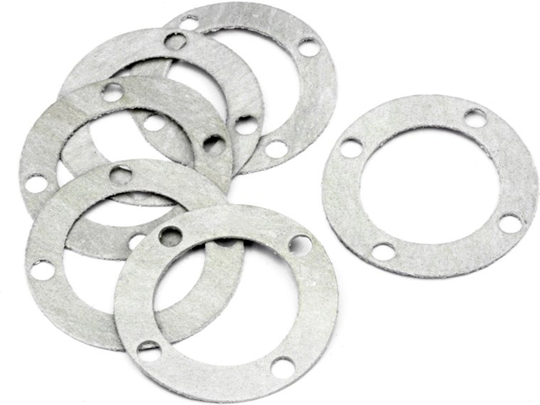
When can I activate which lock, the differential lock or the locking differential?
The differential lock is typically activated in off-road or low-traction situations where one wheel is spinning freely while the other is not receiving power. This helps to evenly distribute power to both wheels for better traction. On the other hand, the locking differential is usually engaged in high-traction situations where both wheels need to rotate at the same speed, such as when driving on a straight road or during high-speed maneuvers. It is important to refer to your vehicle's manual for specific guidelines on when to activate each type of lock. **
What is a differential lock?
A differential lock is a feature in some vehicles that allows the driver to lock the differential, which is the component that allows the wheels to rotate at different speeds. When the differential is locked, both wheels on an axle are forced to rotate at the same speed, which can be useful in off-road or low-traction situations. This can help provide better traction and control by ensuring that both wheels on an axle are working together to move the vehicle. **
Top-Angebote
Products related to Differential:
-
Testo Differential Temperature KitThe Testo Differential Temperature Kit 0554 1208 is a versatile and essential tool for precise temperature measurements. This kit is specifically designed for professionals who require accurate differential temperature readings in various applications. Key Features: Comprehensive Set: Includes two high-quality Velcro probes and a temperature adapter, ensuring seamless integration with the Testo 327. Precision Measurement: Ideal for HVAC technicians, maintenance engineers, and other professionals who need reliable and accurate temperature readings. Easy to Use: The Velcro probes provide a secure and stable attachment to various surfaces, making the measurement process straightforward and efficient.66,00 £*Shipping: 5,00 £Secure redirect to the provider
-
CASTROL 15DE6A Differential oilOil: Mineral Oil; Container Type: Canister; Capacity [litre]: 20; SAE viscosity class: 85W-90; Manufacturer recommendations: MB 235.0, ZF TE-ML 16C, ZF TE-ML 17B, ZF TE-ML 19B, ZF TE-ML 21A, DTFR 12B100 MB 235.0; Specification: API Other GL-5; Liquid:142,99 £*Shipping: 1,99 £Secure redirect to the provider
-
What is differential covariance?
Differential covariance refers to the difference in the covariance between two variables across different groups or conditions. It is used to assess whether the relationship between two variables varies depending on different levels of a third variable. This can help to identify how the strength and direction of the relationship between two variables may change under different circumstances or conditions. Differential covariance is important in understanding how different factors may influence the relationship between variables in a given context. **
-
What is differential calculus?
Differential calculus is a branch of mathematics that deals with the study of rates at which quantities change. It involves the concept of derivatives, which represent the rate of change of a function at a given point. Differential calculus is used to solve problems involving motion, optimization, and many other real-world applications where understanding how quantities change over time is important. It is a fundamental tool in mathematics and is essential in fields such as physics, engineering, economics, and biology. **
-
What are differential calculations?
Differential calculations involve the process of finding the rate of change of a quantity with respect to another quantity. This can be done using techniques such as differentiation, which involves finding the derivative of a function. These calculations are used in various fields such as physics, engineering, economics, and biology to analyze how one quantity changes in relation to another. Differential calculations are essential for understanding and predicting the behavior of systems and processes in the real world. **
-
What are differential tasks?
Differential tasks are tasks that require different levels of skill, knowledge, or expertise to complete. These tasks are often assigned to individuals based on their abilities and strengths, with the goal of maximizing efficiency and productivity. By assigning differential tasks, organizations can ensure that each task is being completed by the most qualified individual, leading to better overall performance. This approach also allows for the development and utilization of diverse skill sets within a team or organization. **
Similar search terms for Differential
-
What is the transfer function after the Laplace transformation of a differential equation?
The transfer function after the Laplace transformation of a differential equation is a mathematical representation of the relationship between the input and output of a system in the frequency domain. It is typically denoted as H(s) and is expressed as the ratio of the Laplace transform of the output to the Laplace transform of the input, assuming zero initial conditions. The transfer function provides valuable information about the system's behavior, such as its frequency response and stability characteristics. It is a key tool in control systems analysis and design. **
-
How can the Bernoulli differential equation be transformed into another form through a transformation?
The Bernoulli differential equation can be transformed into another form through a substitution. By substituting y = u^(1-n), the equation can be transformed into a linear differential equation. This substitution helps to simplify the equation and makes it easier to solve. After solving the linear differential equation, the solution can be transformed back to the original form to obtain the solution to the Bernoulli differential equation. **
-
When can I activate which lock, the differential lock or the locking differential?
The differential lock is typically activated in off-road or low-traction situations where one wheel is spinning freely while the other is not receiving power. This helps to evenly distribute power to both wheels for better traction. On the other hand, the locking differential is usually engaged in high-traction situations where both wheels need to rotate at the same speed, such as when driving on a straight road or during high-speed maneuvers. It is important to refer to your vehicle's manual for specific guidelines on when to activate each type of lock. **
-
What is a differential lock?
A differential lock is a feature in some vehicles that allows the driver to lock the differential, which is the component that allows the wheels to rotate at different speeds. When the differential is locked, both wheels on an axle are forced to rotate at the same speed, which can be useful in off-road or low-traction situations. This can help provide better traction and control by ensuring that both wheels on an axle are working together to move the vehicle. **
* All prices are inclusive of VAT and, if applicable, plus shipping costs. The offer information is based on the details provided by the respective shop and is updated through automated processes. Real-time updates do not occur, so deviations can occur in individual cases. ** Note: Parts of this content were created by AI.